
A split tortilla or soggy taquito can cost a frozen-food buyer repeat orders. The freeze step helps decide whether each product reheats with dependable quality.
Contact Baja Foods to discuss IQF freezing Mexican food for your private label or food service program.
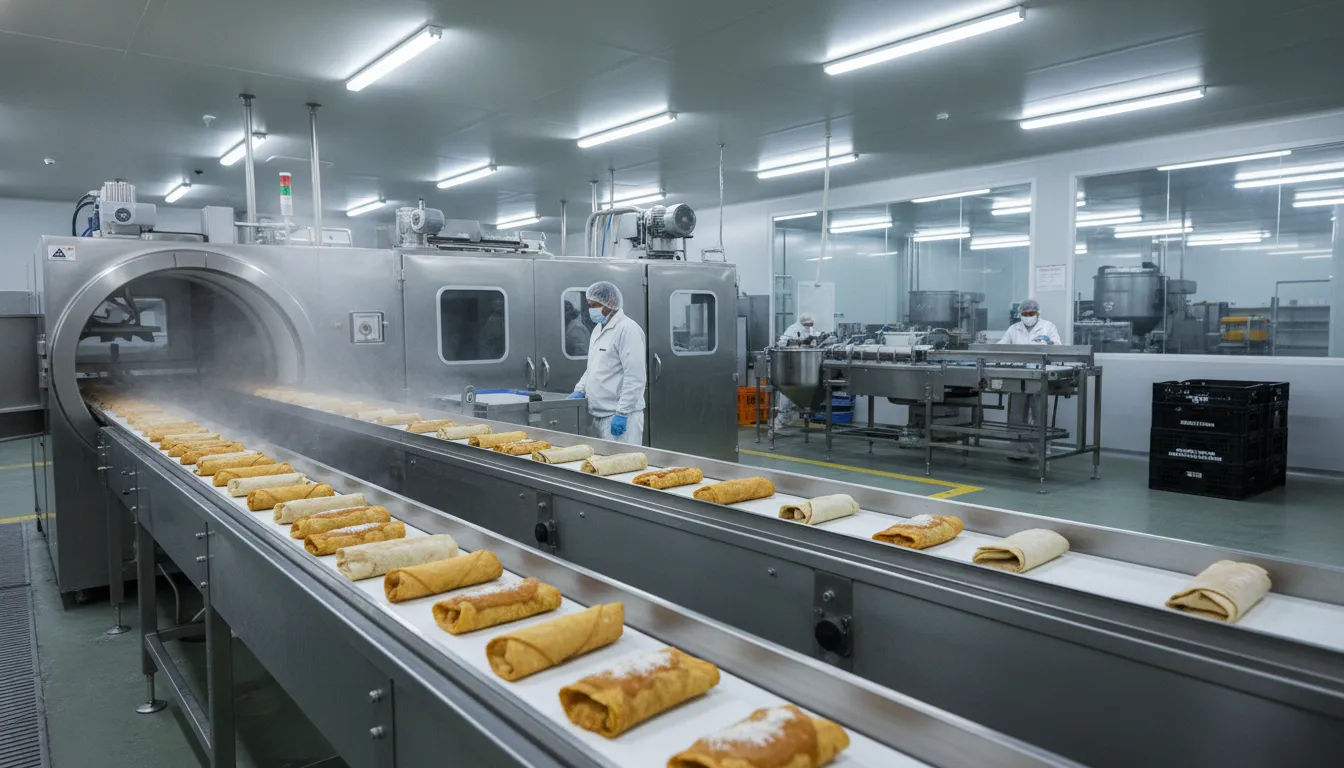
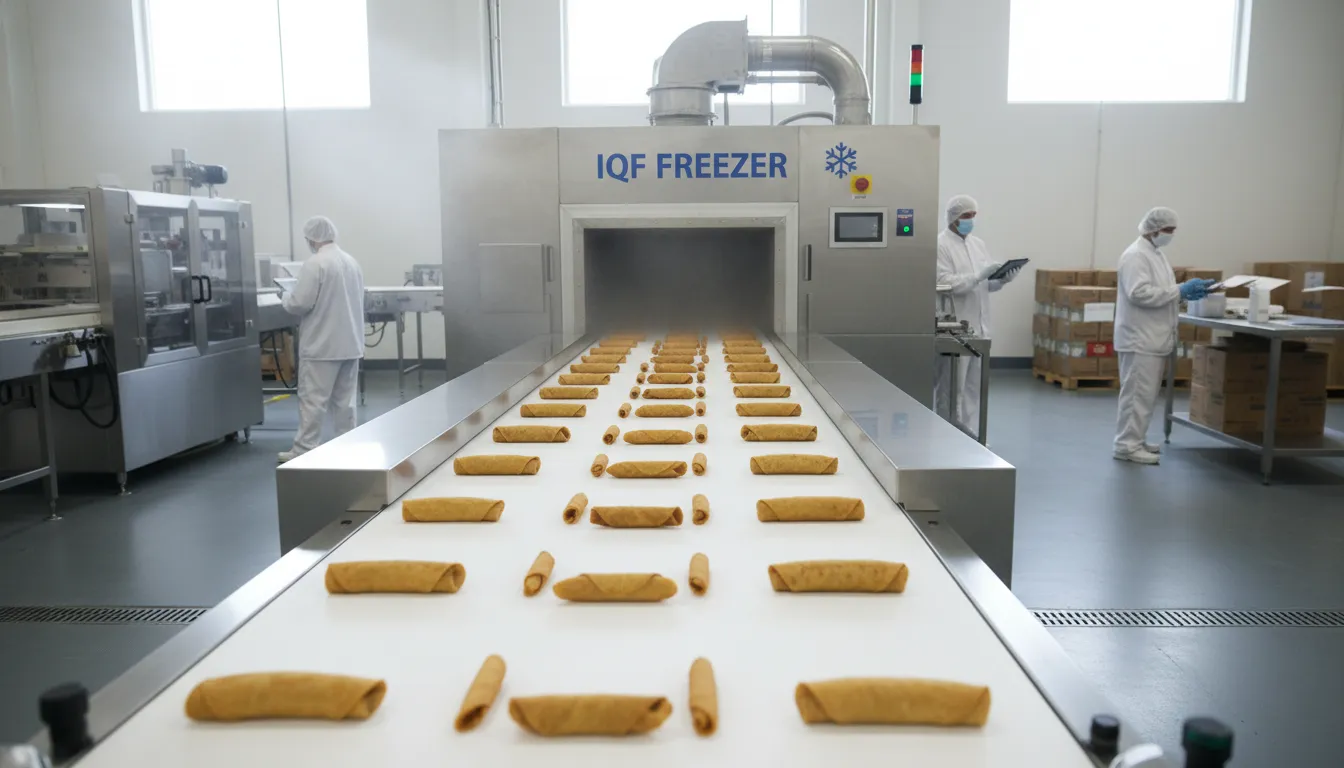
IQF freezing Mexican food quickly freezes individual enchiladas, burritos, taquitos, and other entrees, helping protect texture, flavor, and food safety for high-volume B2B programs. Rapid heat removal forms smaller ice crystals, limiting product damage during frozen storage and later reheating, as IQF processing guidance explains for ready-to-reheat products. For procurement and operations teams, consistent freezing supports repeatable plate quality, easier inventory planning, and dependable cold-chain programs serving multi-site food-service accounts. It also helps manufacturers preserve the expected eating experience throughout the approved shelf-life window under controlled frozen storage. Baja Foods uses IQF for hand-assembled Mexican frozen foods, combining scaled production with quality controls buyers can assess when selecting a manufacturing partner.
For buyers comparing frozen Mexican food manufacturers, the question is whether the freezing method protects eating quality and operating consistency from plant to plate. The first test is simple: What does IQF freezing mean for Mexican food? Here is where the comparison begins:
IQF Freezing Mexican Food: What does IQF freezing mean for Mexican food?
Individual quick freezing, or IQF, freezes each prepared item fast. It does not treat a full packed case as one mass. For buyers researching IQF freezing Mexican food, the meaning is simple. Products move through a controlled freeze step soon after assembly. Burritos, enchiladas, taquitos, and other ready-to-heat entrees can then move as frozen menu items.
What rapid freezing changes
Freezing speed matters because water changes into ice inside food. When crystals grow large, they can disrupt structure and affect moisture during heating or thawing. Research on frozen muscle foods reports effects on cell structure, drip loss, and sensory quality. That finding matters for meat fillings, where moisture and bite shape the eating experience.
IQF uses fast heat removal to help limit ice crystal growth during freezing. For a burrito, that supports a tortilla and filling that reheat with fewer texture issues. For enchiladas, it helps protect the balance among sauce, tortilla, cheese, and filling. This is useful when one entree includes several textures.
Taquitos present another test. The crisp outer layer must warm alongside a seasoned filling. A sound freeze step cannot replace good formulation or cooking directions. It gives the product team a sound base for testing hold time, reheating, and serving results.
Product format changes what the team should check. A burrito needs tortilla flexibility and an even filling bite. An enchilada needs sauce coverage and a tender tortilla after heating. A taquito needs a pleasing outer layer against its filling. Plated entrees may combine rice, beans, sauce, meat, and cheese. The team must check those parts together.
Why it matters to food brands
For B2B development, IQF choices should connect to product tests, not just equipment details. Practical review points include:
- Check whether filled products keep their shape through packing and handling.
- Test reheated texture in the planned oven, fryer, or microwave method.
- Confirm that sauce, tortilla, and filling perform together after frozen storage.
- Review portion accuracy, breakage, and appearance after simulated distribution.
- Compare results after short-term and longer frozen storage intervals.
Food brands do not buy a freezer method alone. They need a product that can move through frozen storage and perform in its planned setting. During a custom Mexican food manufacturing capabilities, buyers can align item design, pack format, heating directions, and quality checks.
Consistency also depends on controls beyond freezing. Ingredients, assembly, temperature checks, packaging, and distribution all affect the finished entree. Procurement teams should review SQF-focused quality systems alongside texture tests for each item. This keeps the discussion focused on repeatable quality, not a technology label alone.
How does IQF protect texture, flavor, and moisture?
IQF protects Mexican frozen food by freezing each item quickly enough to limit large ice crystal formation. That helps tortillas, sauces, cheeses, and fillings retain the intended bite through storage and reheating. For buyers, the practical result is more consistent product quality across cases, kitchens, and repeat orders.
Fast freezing and smaller crystals
IQF freezing Mexican food is about protecting the product during a demanding temperature change. Water inside an entree turns to ice as it freezes. When this change is fast and controlled, crystal growth is limited. That matters because large crystals can press against the food structure and weaken the bite after heating.
The science is useful for filled entrees, not just plain ingredients. A review of research on frozen food quality covers ice crystal growth, cell structure, drip loss, and sensory quality in muscle foods. It shows why the way a food freezes can affect quality after thawing. In a burrito or taquito, the same concerns apply to seasoned fillings and the moisture around them.
Less structure damage helps moisture remain where the recipe needs it. A filling that holds its juices is less likely to wet a tortilla during reheating. Cheese can melt within the product instead of sitting in pooled liquid. Sauces and chile-based fillings can retain a more even body rather than leaving watery spots on the plate.
Protection across Mexican entrees
Each product puts a different demand on freezing. Tortillas need to bend and bite cleanly after heating. Taquito shells should support a crisp finish, while enchiladas need tender tortillas with sauce that heats evenly. Burritos contain tortilla, filling, sauce, and cheese in one package. Moisture control supports the full eating experience.
For product developers, the goal is not simply a frozen center. It is a repeatable balance: a tortilla that does not turn soggy and fillings that remain moist. Cheese and sauce also need to reheat as designed. Baja Foods uses IQF technology to maintain product texture, flavor, and food safety across its frozen Mexican food production.
That control also supports consistent menu execution. Restaurant and food service teams need an entree that performs the same way across cases and cooking cycles. Buyers assessing the scaled frozen Mexican food production can focus on each component. They can assess how a producer protects texture, not only how it freezes a finished item.
Rapid freezing matters when a recipe contains contrasting textures. A crisp-edged taquito and a sauce-covered enchilada cannot be judged by the same bite. In both cases, careful freezing helps protect recipe intent. Reheating then starts with a stable product, not one damaged during frozen storage.
IQF freezing vs blast freezing for prepared entrees
IQF freezing works best when separate pieces, portion control, and surface texture matter. Conventional blast freezing can fit fixed trays or complete packed entrees. The right choice depends on product format, packaging, reheating method, and the finished eating standard your brand needs to protect.
What the two methods change
For procurement teams, the freezer decision begins with product design and serving plan. IQF freezing Mexican food suits entrees or components that must remain separate in the pack. Blast freezing may suit a complete entree that ships and reheats as one packed portion.
Freezing rate also affects what buyers should test after storage. A review of freezing methods in muscle foods reports quality concerns with traditional methods, including air blast freezing. These concerns include cell damage, drip loss, and poor sensory value.
| Buyer criterion | IQF freezing | Conventional blast freezing |
|---|---|---|
| Freezing approach | Rapid freeze with pieces kept separate. | Cold-air freeze of grouped or packed product. |
| Texture focus | Designed for distinct surfaces and fillings. | Calls for close heat-up testing by format. |
| Portion handling | Useful for countable, loose units. | Useful for fixed packs or trays. |
| Packaging fit | Flexible portion bags. | Pre-portioned cartons and meal trays. |
| Best-fit use | Taquitos, components, selectable portions. | Complete entrees sold as one unit. |
Texture, portions, and package format
Loose units change the business case. A taquito or rolled taco must stay easy to count, portion, and load into service packs. IQF is a practical option when the product brief calls for separated units and flexible portion sizes.
A sauced enchilada tray creates a different test. When the buyer orders a fixed meal, a pack-first blast format may match the selling unit. In either case, teams should assess tortilla structure, sauce coverage, filling moisture, and heat-up results.
A procurement brief should state whether a pack opens as loose pieces or serves as a set meal. It should also define acceptable breakage, portion variation, and appearance after reheating. These criteria make line trials easier to compare across samples.
Choosing the line for the entree
Packaging needs can narrow the choice before a line trial starts. Separate pieces support bag formats that let kitchens portion by count or weight. A fixed tray simplifies ordering when the menu uses the whole entree at once.
Throughput should be reviewed with pack accuracy and finished quality. Fast freezing has little purchasing value if pieces break, stick together, or fail the heat-up standard. Product teams can score tortilla bite, seam integrity, filling distribution, sauce condition, and ease of portioning.
Begin with the specification: unit shape, sauce level, portion, package type, and required heat-up. Then use pilot packs to compare each freeze approach against the finished entree standard. Baja Foods’ IQF-enabled manufacturing process is relevant when separated portions matter.
For supplier review, connect freezer selection with process controls and documented quality checks. Review packaging performance, portion consistency, reheating outcomes, and applicable Baja Foods quality and compliance standards before choosing a format. This comparison helps buyers select the method that fits each prepared entree.
Why does IQF support food safety and shelf life?
IQF supports food safety and shelf life by moving prepared foods into controlled frozen storage quickly and consistently. It does not replace validated safety programs, but it helps protect the condition achieved during production. Buyers should evaluate IQF alongside temperature controls, audit records, traceability, and documented quality checks.
Controlled freezing from the start
For IQF freezing Mexican food, the value starts with control. Each product moves through a rapid freezing step designed to remove heat in a managed way. Baja Foods uses IQF technology to help maintain texture, flavor, and food safety in frozen Mexican foods.
Freezing is not only about making an entree cold. It is also about limiting quality changes as a burrito, enchilada, or taquito moves into frozen storage. A review indexed by the National Library of Medicine reports improved control of ice crystal formation. The research links that control with better structure and quality in frozen meats.
That point matters for filled and hand-assembled foods. A product that freezes in a controlled process is better positioned to keep its intended bite and moisture through storage and preparation. IQF airflow is also designed for even freezing and reduced dehydration, which can help protect eating quality.
Temperature discipline and audited standards
IQF is one part of a food safety system, not a stand-alone promise. Once products are frozen, sound temperature management helps preserve the result of the freezing step. Manufacturers must also manage handling, storage, documentation, and quality checks across each production run.
For buyers, this is where process oversight matters. Baja Foods holds an SQF Perfect Score and places focus on FDA, USDA, and SQF requirements. Its quality and compliance systems give procurement teams a direct place to review the company’s quality and certification focus. Review the USDA and FDA requirements for frozen food manufacturers to understand how oversight applies to different product formulas.
IQF supports shelf life because controlled freezing can reduce avoidable quality loss at the point of freezing. It does not replace a validated shelf life program or proper frozen storage. Instead, it supports a stable process for products made at scale and intended to deliver consistent texture and flavor when prepared.
For a buyer, this changes the shelf life conversation. The question is not only how long an item remains frozen. It is whether the manufacturing plan controls freezing, sets storage expectations, and supports repeatable quality review across shipments. That approach links product performance to process discipline.
- Controlled freezing: Rapid heat removal helps limit damage linked with slower freezing.
- Reduced dehydration: Even airflow supports moisture retention and product quality.
- Temperature management: Frozen storage practices help protect the condition achieved during freezing.
- Audited production: SQF oversight helps buyers assess the manufacturing safety and quality system.
This combination is important for private-label and food service partners. They need frozen Mexican foods that fit their safety review process and perform consistently in use. For Baja Foods, IQF works within an audited manufacturing approach, rather than as an isolated technology claim.
Where IQF matters most in Mexican frozen food manufacturing
IQF matters most for Mexican frozen foods where texture, portion separation, and reheating performance shape the customer experience. Burritos, taquitos, enchiladas, bowls, and fillings each have different freezing needs. The best manufacturing partner matches the freeze method to the product format and channel.
IQF freezing Mexican food matters most when texture must hold through frozen storage, reheating, and service. It is not one choice for every product. Instead, it helps protect the parts of a menu item that shape each bite, from filled tortillas to portioned toppings.
Whole entrees with layered textures
Enchiladas, burritos, and taquitos bring several textures together: tortillas, fillings, cheese, and sauce. A tortilla should support the filling, not turn soft too soon during preparation. The sauce should complement an enchilada without masking its structure. For these entrees, the freeze plan should fit the recipe and the final heating method.
Filled products require close attention because the center and the outer layer must perform together. A meat filling that loses moisture or texture can change the finished bite. An academic review of freezing methods discusses cell damage, drip loss, and sensory quality in frozen meat. That concern is relevant when reviewing meat-filled burritos, taquitos, and enchiladas.
Bowls create a different test. Rice, protein, vegetables, cheese, and sauce can be arranged as distinct components or combined in one pack. A brand may want each component to remain clear after heating. A food service operator may need a bowl format that plates cleanly during a busy service period.
Components and operator needs
IQF can add clear value when components will be portioned across more than one product format. Seasoned fillings may serve burritos, bowls, or taquitos. Cheese, tortillas, and selected sauce components may call for a different handling plan than assembled entrees. The right choice depends on how the product is packed, heated, and served.
Private label brands often need a clear product specification across an entire line. They can assess texture goals for a finished enchilada, then set different needs for a burrito or bowl. Partners reviewing the custom frozen entree production can map freezing choices to each recipe, pack format, and end use.
Food service teams may focus on practical kitchen use. Portionable fillings and bowl components can help a menu remain flexible when demand changes. Fully assembled taquitos, burritos, and enchiladas may support simple preparation and repeatable presentation. In each case, IQF has the most value when it protects the quality features that matter at service.
Freezing is only one part of a dependable frozen Mexican food program. Ingredient selection, assembly, process controls, packaging, and handling also affect the finished item. Buyers can review Baja Foods’ audited food safety controls while comparing entrees and components. To understand how SQF certification validates food safety systems, start with that quality overview. The review should match the freeze method to the product and operating need.
Contact Baja Foods to review IQF trials, packaging needs, and launch requirements for your next frozen Mexican food program.
What B2B buyers should ask about IQF capabilities
B2B buyers should ask how IQF capabilities translate into finished product performance. Strong supplier reviews cover product trials, reheating results, QA documentation, packaging fit, production scale, and launch communication. These questions turn a freezer claim into evidence that the manufacturer can support a dependable commercial program.
Selecting a partner for IQF freezing Mexican food starts with the finished menu item, not the freezer model. A buyer needs proof that burritos, taquitos, or enchiladas hold their texture after storage and reheating. Freezing method matters because research links freezing conditions with cell damage, drip loss, and sensory quality in foods. A review of freezing methods is available through PubMed.
The review should also cover how the plant controls safety, pack format, volume, and communication. For a private label brand or food service operator, each question below turns a capability claim into evidence.
IQF partner review checklist
-
Start with a product test. Ask the manufacturer to run your recipe, fill weight, tortilla, sauce, and assembly style through its process. Define what will be reviewed after freezing, such as seal quality, appearance, portion control, and product integrity.
-
Review reheating performance. Test the item through the cooking methods your customer will use, such as oven, microwave, or food service equipment. Check texture, filling distribution, sauce behavior, and ease of service after the frozen product is prepared.
-
Request QA and compliance records. Ask for the food safety plan, audit records, allergen controls, lot coding, traceability steps, and temperature checks. Baja Foods buyers can use its food safety standards with IQF page as a starting point for this review.
-
Match packaging to the channel. Confirm whether the proposed package fits retail, club, distributor, or back-of-house use. Ask how the line manages fill accuracy, seals, case packs, pallet needs, date codes, and label approval before launch.
-
Confirm production scale. Request a clear plan for trial runs, forecasted demand, surge needs, and repeat orders. Buyers should ask what changes when an item moves from a sample batch to regular production, including quality checks and scheduling.
-
Set communication rules before launch. Identify who owns formula changes, packaging approvals, forecast updates, quality issues, and corrective actions. Agree on sample review stages and the records supplied with production lots, so decisions do not rest on informal updates.
A capable partner should answer these questions with samples, records, and a repeatable process. That discipline helps buyers compare manufacturers on the product their customers will receive, not on broad claims about freezing alone.
What operational benefits does IQF offer beyond the freezer?
Beyond texture, IQF can help food service and private label teams plan inventory, portioning, and menu consistency. Separate frozen units reduce handling issues and simplify kitchen execution. The operational value is strongest when the manufacturer connects IQF to packaging, forecasting, quality checks, and repeatable service outcomes.
IQF freezing Mexican food is not only a product quality decision. For a private label brand, restaurant group, distributor, or club channel buyer. It also affects how a frozen entree moves through forecasting, packing, storage, order fulfillment, and menu execution. A process that keeps food pieces stable and predictable can make the difference between a good sample and a program that performs after repeated orders.
That operational value starts with consistency. If burritos, enchiladas, taquitos, fillings, sauces, and cheese behave the same way from lot to lot, buyers can set clearer specifications. They can compare reheating results, case yields, plate presentation, and customer feedback without wondering whether the freezer step changed the product. Consistency also helps product development teams troubleshoot more precisely. If a tortilla cracks, a sauce separates, or a filling dries out, the team can review formula, assembly, packaging, and freeze profile as connected variables.
Inventory and service planning
For food service buyers, frozen Mexican entrees need to work in real operating conditions. They may sit in storage, move through distribution, and then be prepared during a busy service window. IQF helps support a more controlled frozen state, which can reduce clumping and make portion handling more predictable when the product format allows separation. That is especially useful for components, fillings, and items that must be packed or served with consistent counts.
Retail and club buyers care about a different version of the same problem. They need the consumer experience to match the promise on the package. A frozen burrito should reheat evenly. A taquito should keep its structure. An enchilada should protect sauce coverage, tortilla integrity, and filling quality. When freezing is managed with the final use in mind, the product has a stronger chance of surviving the full chain from manufacturing to home freezer.
Why manufacturer discipline matters
The freezer is only one part of the system. Ingredient prep, hand assembly, line speed, packaging, cold storage, and food safety controls all shape the final result. That is why Baja Foods ties freezing capability to a broader manufacturing model. Buyers should evaluate IQF alongside custom Mexican food manufacturing, quality documentation, and the ability to scale repeat orders.
A strong manufacturing partner can explain how the process protects the specific product, not just how the equipment works in theory. That level of detail helps B2B teams launch Mexican frozen foods with fewer surprises, clearer quality targets, and a more reliable path from test kitchen to commercial production.
Frequently Asked Questions
How does IQF freezing preserve food quality?
IQF freezes each food item quickly, limiting the growth of large ice crystals that can damage structure during slower freezing. Smaller crystals help burritos, taquitos, and enchiladas retain texture and reduce moisture loss after reheating. An IQF processing overview links rapid freezing with smaller crystals, less cell damage, and lower drip loss.
Why is IQF important for frozen Mexican food?
Mexican frozen foods combine tortillas, fillings, sauces, cheese, and crisp or tender exterior textures in one product. Fast, controlled freezing helps limit moisture migration and texture damage across those components. Baja Foods states that it uses IQF technology to maintain product texture, flavor, and food safety for its Mexican frozen foods.
What is the difference between blast freezing and IQF freezing?
Blast freezing uses cold moving air to reduce product temperature, often while foods are arranged in trays or batches. IQF focuses on freezing separate pieces rapidly, so products remain free-flowing rather than clumped together. For foodservice buyers, that difference can improve portion control and packaging efficiency. An IQF technology overview identifies individual separation as a defining IQF feature.
How does IQF benefit the shelf life of Mexican frozen products?
IQF can support shelf-life quality by freezing food rapidly during production, which helps limit ice-crystal damage and moisture loss. It does not, by itself, determine an approved shelf life. Packaging, formulation, storage temperature, validation, and cold-chain handling also matter. B2B buyers should request documented shelf-life specifications and storage requirements for each frozen burrito, enchilada, or taquito program.
Ready to plan consistent frozen Mexican food quality?
Contact Baja Foods to start a private label or food service conversation.
Frozen Mexican foods that lose texture, flavor, or serving consistency can create extra work for buyers and weaken repeat purchase confidence. Waiting to review your manufacturing options can compress testing, packaging decisions, and production planning into a tighter purchasing window. Starting now gives your team room to define product requirements, align internal reviewers, and evaluate a freezer-ready program with fewer last-minute choices. Our frozen food manufacturer buyer guide can help structure your evaluation.
Ready to plan a private label or food service line that supports consistent frozen Mexican foods? Contact Baja Foods to discuss individual quick freezing for your burritos, enchiladas, taquitos, or related products. Bring your product goals, volume needs, and quality priorities so the conversation can focus on a practical manufacturing fit.