Sourcing frozen Mexican entrees with meat means buying a compliance system, not just a recipe. One weak control can put a private label program at risk.
Request a custom manufacturing consultation with Baja Foods.
A USDA FDA frozen food manufacturer producing Mexican entrees with meat or poultry must match each product to the right oversight. The plant must document food safety controls and protect traceability through production. It should give buyers evidence for supplier approval before a product enters a private label supply chain. The USDA Food Safety and Inspection Service is responsible for ensuring the safety of meat and poultry products, while FDA regulates most foods outside USDA’s primary jurisdiction. For buyers, HACCP and FSMA readiness show that a plant identifies hazards, keeps applicable records, and manages risk before distribution. SQF certification adds a recognized food safety management standard for assessing whether a supplier can support private label growth without avoidable compliance exposure.
To assess a supplier, start with the controls that separate a sales claim from a documented food safety program for your products. The next section sets the baseline for review.
USDA FDA frozen food manufacturer requirements at a glance
A USDA FDA frozen food manufacturer should be reviewed by product, process, and proof. Buyers need to confirm the applicable agency path, HACCP scope, FSMA traceability records. SQF status, label controls, and the quality team responsible for approving each SKU before production begins.
Product mix and agency oversight
For a frozen Mexican food line, compliance starts with the finished product and its ingredients, not a broad freezer category. An entree may combine meat, poultry, cheese, sauces, grains, and vegetables in one package. That mix matters because oversight can shift with the recipe.
USDA inspection guidance states that USDA regulates products with more than 3% raw or 2% cooked meat or poultry. FDA oversees other food products. Buyers should confirm the agency path for each SKU before reviewing capacity, price, or launch timing.
This is a practical sourcing check. A supplier should be ready to explain how its FDA and USDA compliance controls fit the proposed recipe. The review should cover both the finished item and the ingredients that go into it.
HACCP, FSMA, and SQF roles
HACCP, FSMA, and SQF answer different sourcing questions. Treat them as a set, not as interchangeable labels. HACCP is a method for mapping food safety risks and controls through production. Ask how the plan fits each proposed product and line.
For FDA-regulated work, FSMA should prompt a traceability review. Ask which records follow incoming ingredients and finished lots. Use SQF status to ask about audit discipline, open findings, and follow-up. These questions help buyers assess how a plant handles routine production and a possible issue.
Freezing does not replace this review. The screen should match the actual flow of the product, from receipt through prep, assembly, packing, freezing, and storage. If cooking is part of the process, include that step as well.
A buyer’s sourcing screen
When screening a USDA FDA frozen food manufacturer, ask for product-level answers. A broad claim about compliance is not enough. Buyers should request:
- The expected USDA or FDA path for each SKU.
- The HACCP plan scope for the proposed process.
- FSMA traceability records for ingredients and finished lots.
- Current SQF status and recent audit follow-up.
- The process for recipe, label, or packaging changes.
- The team responsible for quality review before launch.
This screen should happen early in a private label project. It helps a buyer compare plants on evidence, not claims. It also keeps recipe design and compliance review connected as the product moves into custom frozen food manufacturing.
Who regulates frozen Mexican foods: USDA or FDA?
Frozen Mexican foods are regulated based on the recipe, especially the amount and type of meat or poultry in the finished product. USDA FSIS oversees covered meat and poultry products, while FDA regulates most other foods. Buyers should confirm the oversight path for every SKU.
The product formula drives the answer. A frozen burrito, enchilada, or taco is not assigned to an agency just because it is Mexican food. For a buyer, the first step is to list every filling and confirm whether the item contains meat or poultry.
The main jurisdiction split
The USDA Food Safety and Inspection Service (FSIS) is responsible for the safety of meat and poultry products. Its role includes products made wholly or partly from covered meat sources. FDA generally regulates other food products, while USDA leads parts of the oversight for some meat, poultry, and egg products.
That means a cheese enchilada and a chicken enchilada may follow different regulatory paths. The FDA jurisdiction summary is a useful starting point for foods outside USDA’s main scope. It also helps buyers ask a manufacturer which agency oversees each stock keeping unit.
| Buyer question | USDA or FSIS path | FDA path |
|---|---|---|
| What products fit this path? | Covered meat and poultry products | Most other food products |
| What may change the answer? | Type and amount of meat or poultry | Formula without USDA-covered levels |
| What should a buyer request? | Product-specific oversight details | Product-specific oversight details |
| What should be reviewed? | Formula, process, and label plan | Formula, process, and label plan |
Why meat percentages matter
Meat or poultry in the ingredient statement does not always settle the issue by itself. FSIS states that USDA regulates meat and poultry products with more than 3% raw or 2% cooked meat or poultry content. Buyers should confirm the current formula with the manufacturer before selecting the right production path.
Recipe changes can matter. Switching from cheese to cooked chicken, or changing the portion of cooked meat, may affect the oversight question. A manufacturer should review the actual product rather than rely on the product name alone.
A buyer’s review checklist
When comparing USDA FDA frozen food manufacturer options, request a product-level review. Include the full ingredient list, meat or poultry type, cooked or raw status, portion levels, process flow, and planned label. This keeps the sourcing conversation tied to the item that will reach the freezer aisle.
- Ask which agency path applies to each stock keeping unit.
- Confirm who reviews formula changes before production.
- Request the food safety and label review steps for each product.
- Document open questions before approving a launch schedule.
This is a practical screening step, not legal advice. Buyers can also review Baja Foods’ USDA and FDA compliance for manufacturers when assessing fit for a private label program.
Why HACCP, FSMA, and SQF matter before the first purchase order
HACCP, FSMA, and SQF matter because they show whether a manufacturer can prevent hazards. Keep useful records, and support repeatable food safety practices before a buyer issues a purchase order. They turn supplier approval from a sales conversation into an evidence-based review.
Controls before production
A purchase order should follow a review of food safety controls, not start that review. HACCP, FSMA, and SQF help buyers test how a plant manages risk before a product enters routine production. They also show whether the supplier can support a repeatable launch.
HACCP is the practical starting point. The plan maps possible hazards, sets control points, and defines what the team must check during production. USDA FSIS describes HACCP as a tool for finding risks and recording food safety assessments. Buyers should ask what happens when a control falls outside its set limit.
Records that support fast decisions
FSMA adds a prevention and records lens. Good records connect ingredients, production runs, finished goods, and shipment details. This helps when a team must qualify a supplier, review an issue, or narrow the scope of a recall. The records should be clear enough for a buyer to follow without guesswork.
Traceability is not a file cabinet exercise. FDA explains that its FSMA traceability rule uses a risk-ranking model for food tracing to decide which foods need added records. Even when an item is not on that list, organized lot records help a brand act faster.
Before approval, buyers should ask for a short document set:
- The food safety plan and hazard review.
- Critical control points, limits, and check records.
- Lot tracking and recall test records.
- Supplier approval steps for key ingredients.
- Corrective action records when a check fails.
SQF as a buyer check
SQF gives procurement teams another way to assess how the plant applies its controls each day. It should not be treated as a logo on a sales sheet. Buyers should ask how the site prepares for audits, closes gaps, trains staff, and keeps records current.
This review is useful for a USDA and FDA frozen food manufacturer because oversight and product mix can vary. A meat item may need different controls than another frozen entree. Frozen storage does not replace a sound food safety plan. The goal is consistent production with records that explain each decision.
Use the same questions during onboarding and later reviews. Baja Foods outlines its HACCP and FSMA certified processes alongside its production capabilities. That lets a buyer connect compliance documents with the plant practices behind each run.
What buyers should verify in a compliant frozen food partner
Buyers should verify product-level oversight, food safety plans, allergen and label controls, traceability records, cold-chain procedures, audit status, capacity, and ownership for corrective actions. The strongest supplier file ties every claim to a current document, review owner, and follow-up date.
Qualification scope
Supplier qualification should move from paper review to proof under production conditions. For each SKU, map the formula, oversight path, label, process controls, storage needs, and forecast volume. This keeps the review focused on evidence that matters to the planned program.
Start with the product itself. The required records may differ across meat, poultry, and other frozen foods. A partner should explain which rules apply to each SKU. It should also show how its HACCP and FSMA certified processes support the program.
Seven-step supplier checklist
Use one evidence file for every candidate. Record the document name, owner, review date, open question, and follow-up action. The same file can support internal approval and later supplier reviews.
- Confirm the document set. Request current licenses, registrations, certificates, audit reports, food safety plans, and corrective action records for the proposed products. Note expiration dates and ask who owns renewals.
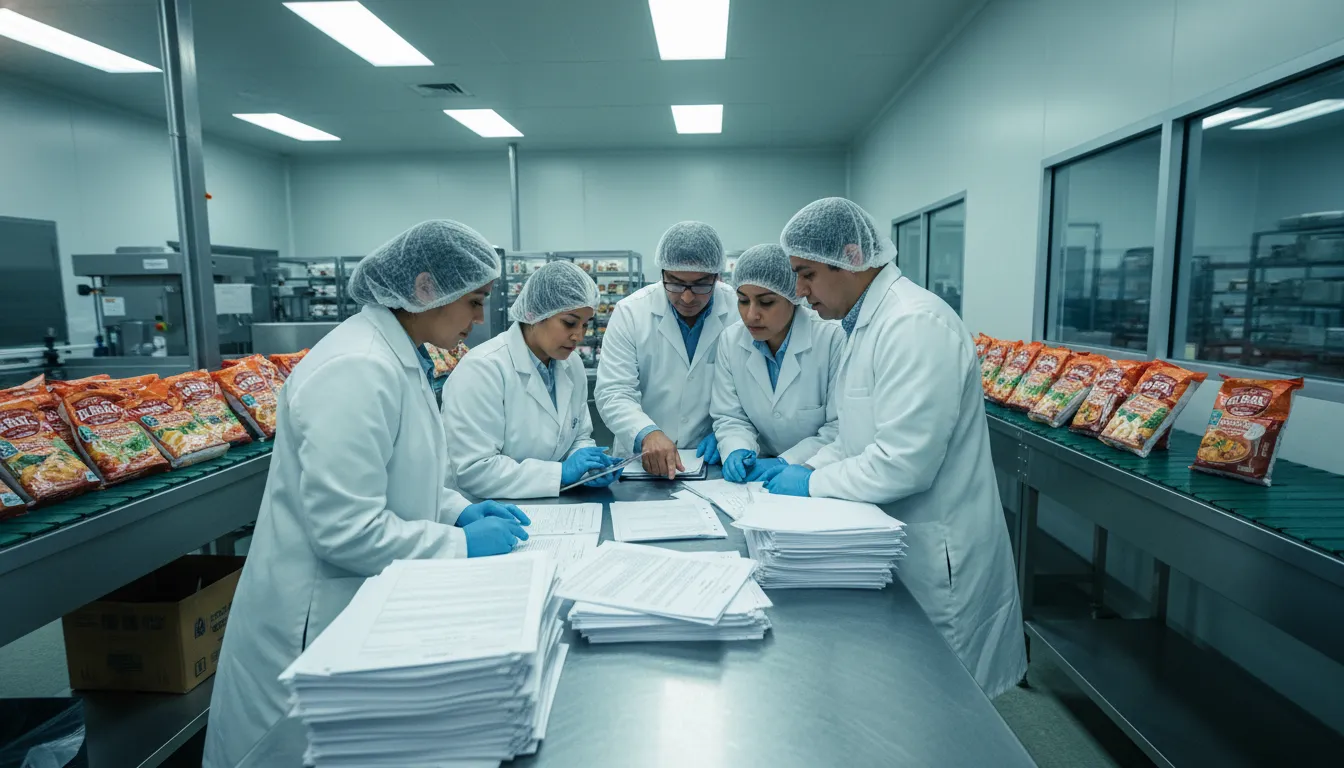
- Audit the facility. Walk the actual production path from receiving through storage and shipping. Review sanitation records, process checks, employee practices, and how the team handles a missed control. Ask to see evidence, not only a written policy.
- Review labels and allergen controls. Compare each formula with its ingredient statement and allergen declaration. Then inspect how the plant stores ingredients, separates work areas, manages changeovers, and checks finished labels before release.
- Test the cold chain. Agree on storage and transit requirements before launch. Inspect freezer logs, loading practices, carrier handoffs, and the response to a temperature issue. USDA notes that freezing food to 0 degrees Fahrenheit inactivates microbes, including bacteria, yeasts, and molds.
- Challenge traceability. Run a mock trace for one ingredient lot and one finished lot. Check how quickly the team can connect receiving, production, storage, and shipment records. The FDA says its FSMA traceability rule uses a risk-ranking model to select foods that need added recordkeeping.
- Validate operating scale. Compare forecast volume with line schedules, changeover needs, labor plans, freezer space, and shipping windows. Ask for a production trial that reflects the planned product format and hand-assembled work, if needed.
- Set the review cadence. Define how the partner reports audit findings, label updates, process changes, trace tests, cold-chain issues, and capacity risks. Name owners on both sides and agree on escalation steps before the first order.
Decision evidence
Finish with a scored supplier record, not a general impression. Mark each item as verified, pending, or unresolved. Attach the supporting file and assign an owner to every open issue. This approach helps procurement teams compare a USDA FDA frozen food manufacturer on compliance, traceability, and production readiness.
The strongest partner review is specific to the SKU and the launch plan. Repeat the same checks when a formula, label, volume forecast, or shipping route changes. That discipline keeps food safety evidence and operating plans aligned as the program grows.
Talk with Baja Foods about your next compliant frozen Mexican food program.
How compliance supports private label growth
Compliance supports private label growth by making scale more predictable. When a manufacturer has clear controls, records, and review processes, brands can add volume, formats, and channels with fewer unknowns around food safety, traceability, labeling, and launch readiness.
A safer path to scale
Private label growth depends on repeatable production, not just a strong recipe. Brands need a manufacturer that can add volume without adding avoidable food safety risk. For frozen Mexican foods, that means clear controls from ingredient intake through finished product storage.
Baja Foods combines high-volume capacity with hand-assembled production at scale. Its Texas base and over 50 years of family heritage support a practical understanding of Mexican entrees. That balance helps brands protect product quality as orders grow across retail, foodservice, and institutional channels.
Controls that support buyer confidence
Compliance gives procurement teams a clearer way to review a manufacturing partner. The USDA Food Safety and Inspection Service is responsible for the safety of meat and poultry products. FDA oversight applies to most other food products. A qualified partner must know which rules apply to each item in a mixed product line.
Baja Foods uses HACCP, FSMA, and SQF as core parts of its compliance approach. These systems help organize preventive controls, traceability, and quality checks. Its HACCP and FSMA certified processes give buyers a useful starting point for supplier review.
- Brands can plan new launches with clearer production requirements.
- Distributors can review sourcing controls before adding products.
- Foodservice buyers can compare suppliers with a consistent checklist.
- Procurement teams can document risk controls for each product line.
Operational readiness for private label programs
Compliance also makes growth easier to manage after launch. New flavors, pack sizes, and channels can change the production plan. Documented controls help teams review those changes before a larger run begins.
A USDA FDA frozen food manufacturer should be ready to explain its process in plain language. Buyers should ask who oversees the product, how risks are tracked, and how records support review. Baja Foods outlines its USDA and FDA compliance for manufacturers as part of its custom production model.
That readiness matters for private label partners with growing order volume. It also matters for distributors serving varied accounts. A structured compliance approach helps each buyer scale frozen Mexican foods with fewer unknowns.
Common compliance gaps that create sourcing risk
Common sourcing risks include unclear regulatory ownership, weak lot traceability, outdated labels, incomplete allergen controls, cold-chain handoff gaps, and vague corrective-action records. Buyers should look for named owners, current documentation, and proof that each control works during routine production.
A supplier review should look past a polished sales deck. The key question is whether the manufacturer can show how its controls work each day. Small gaps in ownership, records, or handoffs can create avoidable risk for a frozen food buyer.
Regulatory ownership and records
Start by asking who owns each product review. A USDA FDA frozen food manufacturer may handle products that require different review paths. The USDA Food Safety and Inspection Service is responsible for the safety and correct labeling of covered meat products. Its inspection program overview gives buyers a useful starting point for questions.
Do not accept a broad answer such as “the quality team handles it.” Ask for a named owner and a clear review step for each formula. Request the records that support the answer. Buyers should also ask how the team updates its process when a formula or supplier changes.
Allergen, label, and traceability checks
Next, review the controls that connect ingredients to the finished package. Ask how allergen checks are recorded during receiving, storage, production, and label approval. A strong review also checks whether the package matches the current formula before a run begins.
Packaging review is another common weak spot. Ask whether the supplier checks artwork versions, ingredient statements, allergen text, cooking directions, and case labels against the approved product file. The review should include a sign-off before production starts and a hold process for outdated packaging.
Traceability deserves its own discussion. The FDA says its FSMA traceability rule uses a risk-ranking model to determine which foods need added recordkeeping. Its traceability rule FAQ can help procurement teams frame record questions. Ask how a supplier links lots, ingredients, packaging, production runs, and shipment records.
- Who approves formula, allergen, and label changes?
- Can the team trace a finished lot back to its inputs?
- How are supplier records stored and reviewed?
- What happens when a record is missing or unclear?
Cold-chain handoffs and buyer verification
Cold-chain procedures should be clear at every handoff. Ask what the team checks before storage, during production, and before shipment. Then ask who reviews the records and what happens when a reading falls outside the supplier’s set range.
Use the same approach for broader food safety controls. Look for written procedures, assigned owners, review records, and a clear path for follow-up. A supplier’s HACCP and FSMA certified processes page can support the first review. Buyers should still ask for product-specific evidence before approving a sourcing relationship.
How Baja Foods approaches quality and compliance
Baja Foods approaches quality and compliance through USDA and FDA oversight, HACCP and FSMA processes, SQF certification, and documented production controls for hand-assembled frozen Mexican foods. Its buyer value is strongest when procurement teams need compliance evidence plus scalable custom manufacturing.
Oversight built into production
Baja Foods is a custom frozen Mexican food manufacturer based in Texas. Its work combines high-volume production with hand-assembled entrees for private label brands, food service providers, and institutional clients. That balance shapes its approach to quality: food safety and repeatable production must move together.
The facility operates under strict USDA and FDA oversight. The USDA Food Safety and Inspection Service is responsible for the safety of meat and poultry products. The FDA regulates other food products that do not fall under the USDA’s main jurisdiction. This oversight helps partners manage risk across different fillings, formats, and ingredient profiles.
A layered food safety framework
Baja Foods uses HACCP, FSMA, and SQF as core parts of its compliance strategy. These programs serve different but connected roles. Together, they support a clear process from ingredient handling through finished frozen products.
- HACCP focuses on food safety hazards and critical control points in the production process.
- FSMA supports a preventive approach to food safety and traceability.
- SQF adds a recognized framework for food safety and quality management.
This layered approach matters because freezing is only one part of safe production. A manufacturer also needs controls before products enter storage and distribution. Baja Foods provides more detail on its USDA and FDA compliance for manufacturers within its custom manufacturing services.
SQF also gives partners a clear quality benchmark. Baja Foods has maintained an SQF Perfect Score certification for two years in a row. The result reflects a system built around daily controls, not a one-time review.
Scale with hands-on assembly
Compliance does not sit apart from production at Baja Foods. It supports a model built for high-volume, hand-assembled Mexican entrees. Production can reach thousands of units per hour while keeping the hands-on process that defines the food.
Each run must meet the needs of the product, the partner, and the sales channel. That calls for steady controls as recipes and formats change. It also helps procurement teams look beyond price when they compare manufacturing options.
That is central to Baja Foods’ position as “The Manufacturer’s Manufacturer.” The company works with brands that need frozen food production without building their own plant capacity. Its role is not limited to making an item. The aim is to pair hands-on assembly with food safety systems that support dependable production at scale.
Review Baja Foods custom manufacturing options for compliant frozen Mexican foods.
Frequently Asked Questions
These answers address the most common buyer questions about USDA and FDA oversight, HACCP, FSMA, SQF, and frozen-food safety. Use them as a starting point for supplier qualification, then request product-specific records for each frozen Mexican food program.
What is the difference between USDA and FDA jurisdiction for frozen food?
The agency depends on the product recipe. The USDA Food Safety and Inspection Service oversees meat and poultry products with more than 3% raw or 2% cooked meat or poultry. The FDA regulates most other foods. Buyers should confirm which oversight applies to each frozen entree.
Why is HACCP compliance necessary for a frozen food manufacturer?
HACCP helps a frozen food manufacturer identify hazards, define critical controls, and document how food safety risks are managed. The USDA Food Safety and Inspection Service describes HACCP as a preventive approach to food safety. Buyers should review the manufacturer’s plan, monitoring records, and corrective-action process before approving a supplier.
What role does SQF play in frozen food sourcing?
SQF gives buyers an additional way to assess a manufacturer’s food safety systems beyond required regulatory oversight. It supports supplier qualification by showing that documented processes are reviewed against a recognized SQF certification framework. Buyers sourcing frozen Mexican foods should ask for the current certificate, audit scope, and any corrective-action records relevant to the products under consideration.
How does FSMA impact frozen food manufacturers?
FSMA places stronger emphasis on preventing food safety problems and maintaining useful records. For buyers, the practical question is whether a supplier can document controls and support traceability when needed. The FDA explains that its traceability rule uses a risk-ranking model to identify foods requiring added recordkeeping.
Does freezing food destroy bacteria and parasites?
No. Freezing is not a substitute for controlled manufacturing, safe handling, or proper cooking. According to the USDA Food Safety and Inspection Service, freezing food to 0 F inactivates bacteria, yeasts, and molds present in food. Buyers should still verify a manufacturer’s preventive controls and cold-chain practices. For more on how freezing methods affect product quality, read about IQF freezing for Mexican food.
Ready to source compliant frozen Mexican foods?
If your team is evaluating a USDA FDA frozen food manufacturer. The next step is a focused discussion about product formula, oversight path, volume, traceability needs, and launch timing. Baja Foods can help qualified buyers review fit before production planning begins.
Choosing a manufacturing partner without a clear compliance process can create avoidable delays, sourcing uncertainty, and added work for your team. Starting the conversation now gives your team time to review requirements, align product details, and plan a smoother path to production. A focused consultation can help you clarify the next steps for meat or poultry products before your sourcing timeline becomes more difficult.
Ready to discuss your product requirements? Request a custom manufacturing consultation to start planning with Baja Foods. Contact the team now to move your sourcing review forward with a clearer next step.